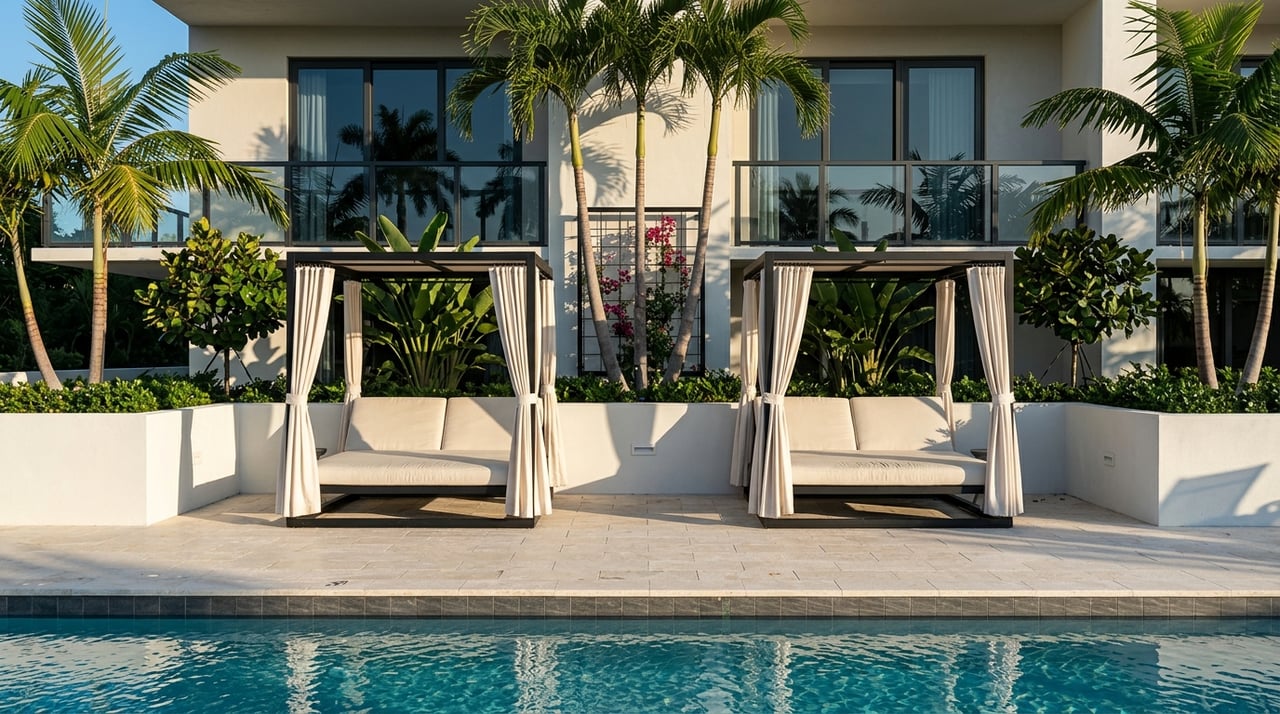
What It Is Like To Own A Part-Time Home In Miami
June 11, 2026
June 11, 2026
Dreaming about a home you can lock, leave, and return to when Miami is at its best? For many buyers, a part-time home in Miami sounds like sunshine, ocean air, and an easy getaway lifestyle. The reality can be just as appealing, but it also comes with seasonality, condo rules, and planning details you will want to understand before you buy. Let’s dive in.
Owning a part-time home in Miami means living on Miami’s calendar, not just your own. Winter is one of the city’s most sought-after times, with mild weather and typical highs in the upper 70s, which helps explain why seasonal living is so popular.
Summer brings a very different rhythm. Southeast Florida is warm and humid, with frequent showers and thunderstorms, and Miami-Dade County’s Heat Season runs from May 1 through October 31. If you plan to use your home only part of the year, that seasonal shift will shape both your lifestyle and your maintenance plan.
There is also a major event cycle to consider. Early December brings the buzz of Art Basel Miami Beach and Miami Art Week, while hurricane season runs from June 1 to November 30, with the most activity usually from mid-August to mid-October. In simple terms, the months that feel the most exciting for visitors are not always the same months that require the most attention from owners.
For many buyers, part-time ownership in Miami points naturally toward a condo or managed residence. That is especially true if you want a home base that feels travel-friendly and less hands-on than a standalone property.
In Florida, condo ownership is association-governed. That means you are not just buying the unit itself. You are also buying into building management, shared maintenance, reserve funding, and the rules that guide how the property is operated.
For a part-time owner, this setup can be a real advantage. Instead of focusing on yard work and constant exterior upkeep, your day-to-day experience is often shaped more by building services, management quality, and how well the property is maintained over time.
If you are comparing Miami properties for seasonal use, monthly dues are only one part of the financial picture. Florida requires milestone inspections for certain residential condo and co-op buildings that are three or more habitable stories high once they reach specific ages.
Qualifying buildings also need Structural Integrity Reserve Studies at least every 10 years. Those studies can influence regular assessments, special assessments, or borrowing decisions by the association. For you as a buyer, this means the building’s financial health matters just as much as the finishes inside the unit.
A beautiful condo with strong management and clear reserve planning may feel very different from a similar-looking unit in a building facing larger future costs. When you own part-time, peace of mind often comes from the building itself, not just the view.
The best part-time home in Miami depends a lot on the pace you want when you arrive. Some areas feel energetic and highly walkable, while others offer a calmer, more residential setting.
Miami Beach is one of the clearest examples of the part-time-home lifestyle. As a barrier island divided into South Beach, Mid Beach, and North Beach, it gives you several versions of coastal living in one connected area.
South Beach is the most famous, known for sandy beaches and Art Deco architecture. North Beach is described as more relaxed and largely residential, which may appeal if you want a quieter home base without leaving Miami Beach behind.
The seven-mile Beachwalk stretches from South Pointe Park to North Beach Oceanside Park. Complimentary trolleys connect South, Mid, and North Beach, which helps support a more convenient day-to-day routine even when you are not driving everywhere.
If your vision of part-time ownership includes a high-rise setting, North Beach is especially relevant. The Beachwalk area includes a stretch lined with high-rise condos and hotels, making it a useful example of service-oriented coastal living.
That can be attractive if you want a lock-and-leave property where your surrounding environment supports an easy routine. You may spend as much time enjoying the Beachwalk, parks, and nearby public space as you do using building amenities.
Coconut Grove offers a different mood. It is described as lush, bayside, laid-back, and bohemian, with quiet residential streets and a strong boating culture.
If you want Miami access without the beach-core energy, this area may feel more grounded and residential. It can be a good fit for buyers who value a slower pace when they are in town.
Key Biscayne is reached by the Rickenbacker Causeway and is described as a subtropical offshore paradise. Beaches, nature preserves, boating, and water sports define much of the experience.
For some part-time owners, that setting feels more like a retreat than a city stay. If your goal is to arrive in Miami and settle into an outdoor lifestyle quickly, this kind of location may be especially appealing.
Kendall gives you a useful contrast to the coast. About 15 miles southwest of Downtown Miami, it is described as relaxed and inviting, with shopping, dining, golf courses, parks, and transit access.
If beach adjacency is not your top priority, an inland area like Kendall may offer a different value equation and a more everyday residential feel. For some buyers, that lower-intensity rhythm is exactly what makes part-time ownership work.
One of the biggest lifestyle questions for seasonal owners is how often you will actually need a car. In parts of Miami Beach, daily life can be more car-light than many buyers expect.
The Beachwalk, bike access, public parks, and complimentary trolley service make it easier to move around the beach core. If your home is near those features, the neighborhood itself becomes part of your amenity package.
In the City of Miami, trolley routes connect areas like Downtown, Brickell, Coconut Grove, and Coral Way. That helps support a more city-based routine in certain neighborhoods, particularly if you value walkability and shorter local trips.
That said, car-light does not mean car-free everywhere. The more inland or spread-out your daily pattern is, the more important driving may become.
When buyers think about amenities, they often picture pools, gyms, and concierge desks. In Miami, the most meaningful part of the lifestyle can be just outside the building.
Miami Beach highlights the Beachwalk, bike rentals, parks, dog runs, picnic areas, walking paths, museums, and waterfront public spaces. For a part-time owner, that can make everyday living feel fuller, even if your actual time in residence is limited.
This matters because the right property is not only about what the building offers. It is also about whether the neighborhood supports the kind of mornings, afternoons, and evenings you want when you are in town.
Miami’s beaches are a major draw, but they are not static. Miami-Dade County says sargassum season generally runs from March through October, and county crews clean beaches daily, with especially active hot-spot cleanup during high-use periods.
That is helpful context if you are picturing an always-perfect shoreline. Beach living in Miami is beautiful, but it is also actively managed, seasonal, and affected by weather patterns.
For part-time owners, that is not a drawback so much as a reminder to set realistic expectations. The experience is still special, but it comes with the rhythms of a real coastal environment.
One planning point surprises many buyers. In Miami-Dade County, homestead exemption requires that the property be your permanent residence as of January 1.
That means a true part-time home or second home generally does not qualify for homestead treatment. If you are comparing costs, this is an important detail to understand early rather than after closing.
For most seasonal buyers, a condo or managed residence is often the simpler fit. You are usually choosing a home that is easier to leave for stretches of time and more centered on building oversight than on hands-on property care.
That does not mean a house is never the right choice. It means you should be honest about how involved you want ownership to feel when you are away.
A good way to think about it is this: if you want Miami to function as a convenient home base, condo living may match that goal well. If you want more space and are comfortable with a more active ownership role, other property types may still be worth exploring.
At its best, owning a part-time home in Miami feels like stepping into a lifestyle that is ready when you are. Winter weather, waterfront public spaces, event energy, and neighborhood variety all make the city appealing for seasonal use.
At the same time, smart ownership here means paying attention to building governance, reserve planning, seasonal weather, and how your neighborhood functions when you are not just vacationing but actually living there. The best fit usually comes from matching your routine to the right location and property style.
If you are exploring a Miami part-time home and want a trusted team to help you think through lifestyle fit, ownership tradeoffs, and referral support, ProMoves Team is here to help you move with clarity.
We take great pride in the relationships Iwebuild and always work relentlessly on the client’s behalf to help them achieve their real estate goals.