Phoenix Relocation Guide for Texans Planning a Smarter Move
May 7, 2026
May 7, 2026
Thinking about trading Texas for the Valley of the Sun? Phoenix can feel familiar at first glance, with suburban neighborhoods, single-family homes, garages, pools, and HOA communities that echo many Texas markets. But once you look closer, the biggest differences show up in the numbers, the climate, and the way homes are built for daily life in the desert. This guide will help you compare Phoenix to Texas in practical terms so you can move with more clarity and fewer surprises. Let’s dive in.
If you are asking whether Phoenix is cheaper than Texas, the honest answer is: not across the board. Recent Redfin data shows Phoenix with a median sale price of $460,000 as of March 2026. That places it below Dallas at $499,000 and Austin at $530,000, but above Houston at $345,000 and San Antonio at $260,000.
The tax picture is also different. Arizona has a flat 2.5% individual income tax, while Texas has no individual income tax. On the other hand, Arizona’s average effective property tax rate is 0.44%, compared with 1.40% in Texas.
Utility costs can also change your monthly budget. Arizona’s average residential electricity price in 2024 was 12.74 cents per kilowatt-hour, compared with 9.79 cents in Texas. In simple terms, Phoenix may offer lower property tax pressure, but that can be offset by state income tax and somewhat higher electricity costs.
For many Texans, Phoenix does not feel like a culture shock in the housing market. You will still find detached homes, attached garages, private yards, pools, and master-planned or HOA-governed communities. If you are moving from a suburban Texas market, that part of the transition may feel fairly natural.
The general Sun Belt layout also feels recognizable. Many buyers coming from Texas are used to driving-oriented communities, newer subdivisions, and homes designed for warm-weather living. Phoenix shares a lot of that DNA, even if the details look different.
The biggest practical change for most Texans is the weather. Phoenix Sky Harbor averages a July high of 106.5°F, while Dallas Love Field averages 96.9°F, Austin Camp Mabry 96.6°F, Houston Hobby 92.9°F, and San Antonio International 94.9°F. Phoenix is not just a little hotter. It is meaningfully hotter in peak summer.
It is also dramatically drier. Phoenix averages 7.22 inches of precipitation annually, compared with 38.32 inches in Dallas, 36.25 in Austin, 55.62 in Houston, and 32.38 in San Antonio. That shift affects how the air feels, how yards are landscaped, and how you evaluate a home.
If you are used to green lawns, frequent rain, and humidity, Phoenix will change your daily routine. Shade matters more. Outdoor use hours matter more. Water-efficient landscaping matters more.
When you tour homes in Phoenix, cooling performance should move to the top of your checklist. The U.S. Department of Energy notes that comfort in hot climates depends heavily on insulation, efficient windows and doors, shading, ventilation, and effective cooling equipment. In Phoenix, those are not nice extras. They are core livability features.
You should pay close attention to the HVAC system’s type, age, and capacity. Ask whether the home uses central air, an evaporative cooler, or a combination of systems. In low-humidity climates, evaporative coolers can use much less energy than central air, but they also require water and maintenance.
It also helps to look beyond the thermostat. A home with decent cooling equipment can still struggle if it has poor insulation, too much direct sun exposure, or weak air sealing. In a desert market, the whole home envelope matters.
Before you get too attached to a property, focus on these practical items:
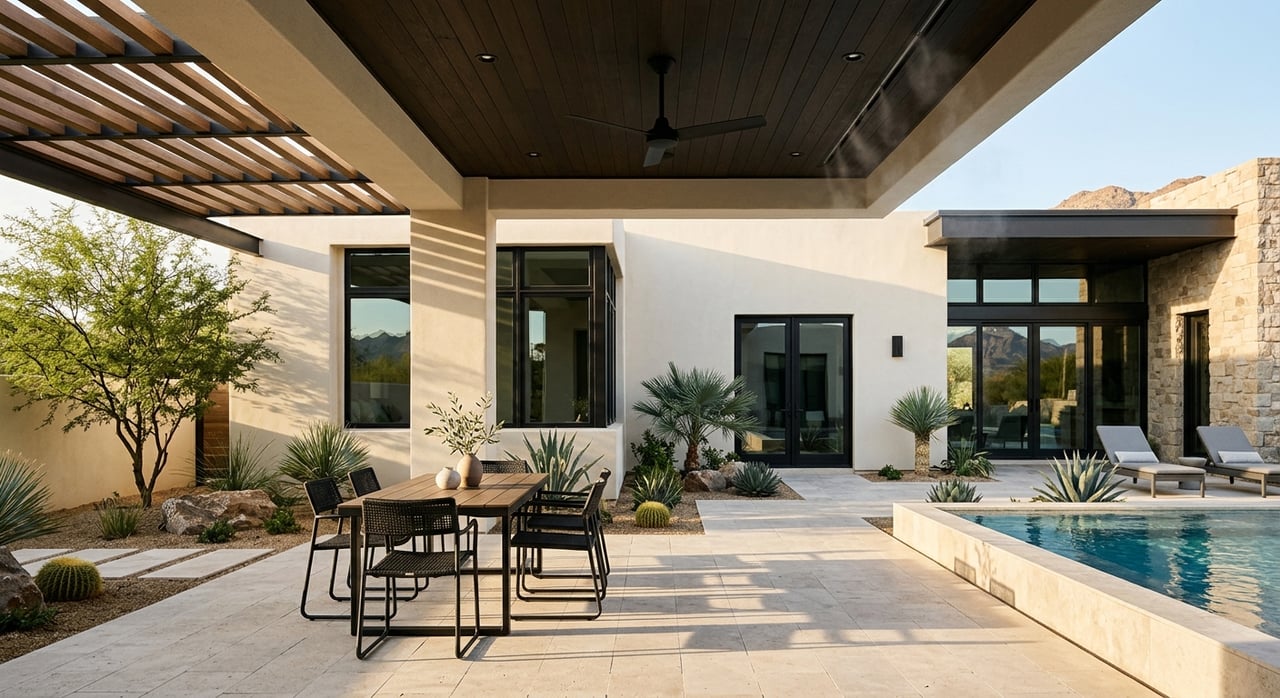
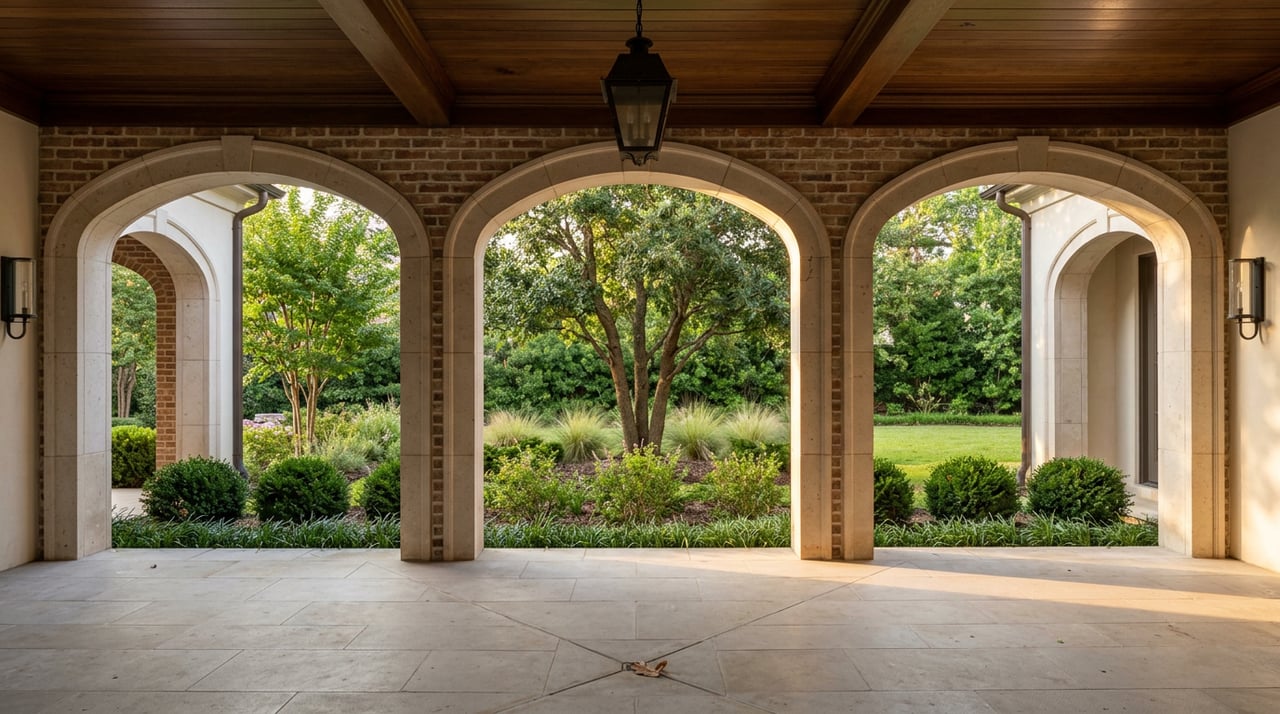
Phoenix homes often look more Southwestern than many Texas buyers expect. Historic residential styles in Phoenix include Southwest Style, Spanish Colonial Revival, Transitional or Early Ranch, and Ranch. These homes commonly feature stucco exteriors, low or flat rooflines, red-tile roofing, parapet walls, arched openings, and long horizontal layouts.
That means you may notice a different visual rhythm than in many Texas suburbs. Even in neighborhoods that feel familiar in layout, the architecture often reflects desert conditions and regional style. For some buyers, that is part of the appeal.
In Texas, buyers often focus on lawn size, tree cover, and whether the backyard has room to play or entertain. In Phoenix, outdoor living is still a major draw, but the priorities shift. Shade, patio function, irrigation efficiency, and durability in extreme heat become more important.
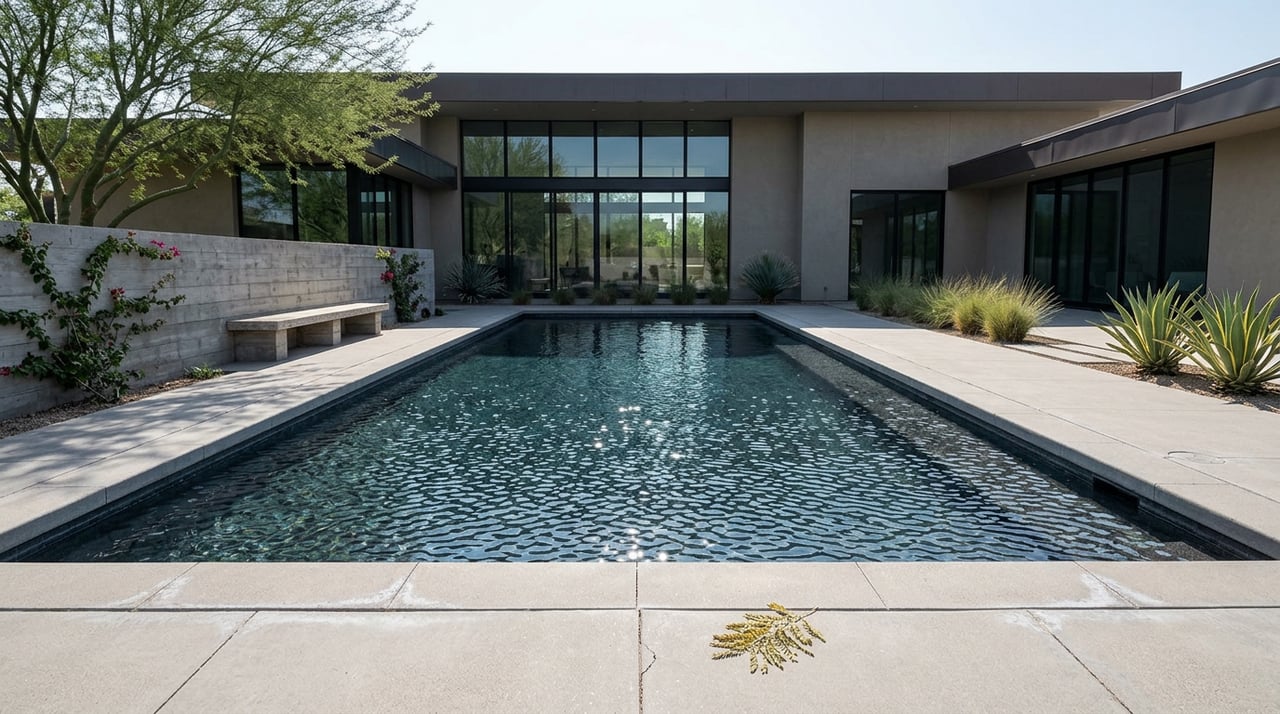
Phoenix Water encourages xeriscape, low-water native plants, nighttime watering, and pool covers to reduce evaporation. That gives you a strong clue about how desert outdoor spaces are designed to perform well over time. If you are comparing homes, it makes sense to look at how much maintenance, water use, and sun exposure each yard may require.
The city also notes that monsoon season runs from June 15 through September 30, with storms peaking between mid-July and mid-August. So while Phoenix is dry, outdoor areas still need to handle seasonal wind, dust, and storm activity.
When comparing properties, look for features that support year-round use:
If you are moving from Texas, HOA living may not be new to you. Still, Phoenix-area buyers should review HOA rules early, not late in the process. The Arizona Department of Real Estate says buyers in new subdivisions must receive a Public Report before signing, and that report includes taxes, assessments, and HOA details.
That same state guidance warns that CC&Rs may restrict landscaping, RV parking, play equipment, satellite antennas, and other common property features. Those rules can directly affect how you use your home and yard. In a market where outdoor spaces and desert landscaping play a major role, that review is especially important.
The key takeaway is simple: do not assume a community works like the one you left in Texas. Read the documents carefully and ask specific questions before you commit.
A good relocation move starts with comparing homes through a Phoenix lens, not a Texas one. The biggest mistake buyers make is focusing only on square footage, photos, or list price. In Phoenix, comfort, operating costs, and outdoor usability deserve just as much attention.
As you narrow your options, try to compare each property across the same categories. That keeps emotions from driving the entire decision and helps you spot the home that will function best in the desert.
| Category | What to Compare |
|---|---|
| Price | How the home stacks up against your Texas budget |
| Taxes | State income tax plus property tax impact |
| Utilities | Expected electricity demand in summer |
| Cooling | HVAC type, age, and efficiency |
| Exterior | Shade, stucco condition, roof style, sun exposure |
| Yard | Water use, irrigation, and low-maintenance design |
| HOA | Rules, assessments, and property-use restrictions |
| Lifestyle | Pool, patio, garage, and everyday livability |
Relocating from Texas to Phoenix is less about learning a completely new way to live and more about adjusting your priorities. Many of the home types and community formats will feel familiar. The desert climate is what changes how you evaluate value.
If you go in with the right expectations, Phoenix can make a lot of sense for Texans who want suburban familiarity with a different natural setting. The smartest buyers focus on the full picture: home price, taxes, utility costs, cooling setup, HOA rules, and outdoor functionality.
At ProMoves, we know relocation decisions often move fast and come with a lot of moving parts. If you are planning a Texas-to-Phoenix move and want a trusted team to help coordinate next steps and referral support, connect with ProMoves Team.


We take great pride in the relationships Iwebuild and always work relentlessly on the client’s behalf to help them achieve their real estate goals.